
About us
Riga Art and media school
The most convenient public transport to get to us:
Buses:
- Bus No. 4 – get off at “Dubultu iela” stop
- Bus No. 53 – get off at “Imantas stacija” stop
Train line: Riga – Tukums/Jūrmala
- Get off at Imanta station
The school is located 6 km from Riga International Airport.
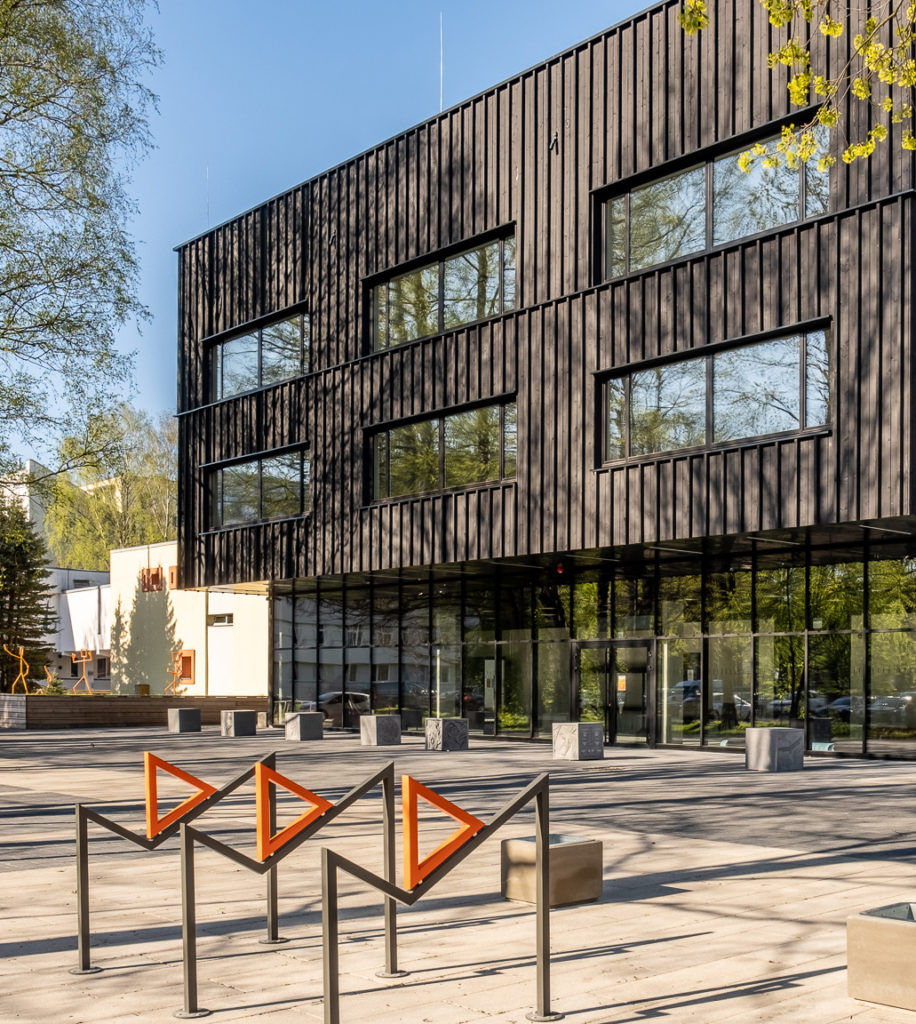
Riga Art and media school is a modern secondary vocational education institution (EQF-4). The school offers accredited education programs for acquiring professional secondary education (after 9th grade, with a study duration of 4 years). The school consists of 4 departments, offering teaching programs in 14 different specializations.
Riga Art and media school is a modern and contemporary vocational education institution with excellent technical equipment and well-equipped, modernized learning facilities. It is a place where timeless art meets cutting-edge technology. A place where lasting stability is valued, interwoven with the nuances of modern art. The school features a dormitory, a sports complex, event organization spaces, and workshops tailored to different specializations. Various extracurricular activities are available, including a choir, a theater group, a student council, and a variety of sports activities.
Erasmus+
We provide opportunities for Riga Art and media school students, teachers, and recent graduates to participate in Erasmus+ international projects. Riga Art and media school Erasmus+ team has been actively working since 2012, implementing both Erasmus+ KA1 learning mobility projects and Erasmus+ KA2 strategic partnership projects. Riga Art and media school Erasmus+ collaborates with partner organizations, educational institutions, and companies in Italy, Spain, Portugal, Finland, Denmark, the Czech Republic, the United Kingdom, the Netherlands, and other countries. Each year, around 100 participants from the school gain valuable international experience.

Media art department
The Media Art Department provides students with the necessary equipment and access to several fully equipped, modern studios and computer labs. Riga Art and media school currently has the most advanced analog photography lab in Latvia for photo development. The school is also equipped with Mac computers tailored to the demands of the job market, enabling multimedia content processing. Additionally, students have access to all the latest and most essential design software.
Photographer
A photographer is a specialist who creates and processes high-quality, professional photographic images, evaluates, selects, and preserves materials according to the requirements of an employer or an individual client.
Video operator
Animation and Web design
An audiovisual communication design assistant specializes in classical animation and 3D modeling or web design and user experience development. An animator has the ability to bring any graphic object, concept, or an idea to life, presenting it to the client or audience in an aesthetically appealing form.
Lighting operator
A lighting operator applies artistic lighting solutions, ensures and checks the placement of lights, selects the necessary number of light sources, their power, and the direction of light beams. They manage the operation of lighting equipment and control systems in theater (on stage), film, television (in studios), events, concerts, performances, and creative projects. Additionally, they participate in video production (commercials) and handle lighting for environmental installations.
Sound operator
A sound operator ensures event sound reinforcement, records audio, and plays back prepared audio materials (music, voice, sound effects). They handle the setup of electronic equipment, work with microphones, sound amplifiers, mixing consoles, and recording devices, and assess the readiness and suitability of the recording equipment for the given task.
Design department
The Design Department offers four specializations: Graphic design, Interior design, Stage design (Scenography), and Product design assistant programs. Students gain knowledge of both contemporary and traditional art, design, architecture, environmental planning, production, and decoration methods.They develop design thinking, empathy, and the ability to analyze problems, enhancing their creativity to create user-oriented art and design solutions using design and artistic methods.
Graphic design
A graphic design specialist is skilled in creating various 2D and 3D advertising materials, including posters, brochures, and banners. In addition to working in the digital environment, students gain hands-on experience in packaging design, as well as the creation and planning of spatial advertisements and environmental stands. Digital skills are developed using various graphic design software, such as Adobe Illustrator, Adobe Photoshop, and InDesign for layout design.
Interior design
An interior design specialist has mastered the fundamentals of architecture, spatial functions, ergonomics, and the art of interior arrangement, as well as the knowledge of materials and their applications. They are skilled in furniture design basics, 3D modeling, and computer visualization, enabling them to create interior design projects and develop various models and prototypes.
Product design (3d forms)
A product design specialist is skilled in creating three-dimensional, functional design objects. They can work with various materials such as plaster, glass, porcelain, ceramics, concrete, epoxies, and silicones. They are proficient in 3D form creation, including plaster molding, silicone molding, and vacuum forming. Additionally, they have mastered modern technologies, including 3D computer modeling, 3D scanning, and file preparation for 3D printing, CNC milling, and laser cutting.
Stage design (scenography)
A stage design specialist is skilled in visually interpreting text using visualization and associative methods in both 2D and stage environments. Students learn large-scale painting, transferring drawing techniques, and replica creation. They are proficient in creating three-dimensional visualizations and digital projections. The program covers essential computer skills, digital graphics fundamentals, and an introduction course to lighting and sound design. Graduates can collaborate with theater and film artists, working in theater productions and film sets.
Textile art and fashion design department
Studying in the Textile Art and Fashion Design Department provides the opportunity to work with contemporary materials, modern technologies, and constructions. Students can creatively develop and execute new collections of clothing and textile products. Learning tasks are designed in alignment with current fashion trends and technologies.
Textile material design specialist
A textile material design specialist is skilled in creating textile products in both 2D and 3D formats. They have mastered various textile design techniques, including 3D textiles, digital textiles, experimental textiles, batik, printing, weaving, and more. The specialist can develop visualizations of textile products (computer graphics), define technical parameters, create sketches, and produce material samples using different techniques and materials. This specialization includes designing and producing items such as scarves, bags, rugs (tufting), fabric patterns, tablecloths, and more.
Fashion design specialist
A fashion design specialist is skilled in researching modern materials, advanced technologies, and garment constructions, as well as creatively developing and producing new clothing collections. Students in the fashion design program can create garment visualizations (computer graphics), define technical parameters, and select or even develop suitable materials for their own designs. During their studies, they learn to design and produce garments from a concept to a fully wearable product. They can create items such as skirts, trousers, blouses, jackets, accessories, and other clothing pieces. Students enhance their professional experience by organizing fashion shows, participating in exhibitions, and competing in design contests.
Wood and metal art department
Riga Art and media school is the only school in the Nordic region that offers such an exclusive set of industry-specific skills within its Wood and Metal Art Department. This specialized training enables the students to achieve outstanding results in various global and European professional mastery competitions. The acquired skills will support them in undertaking individual projects and establishing their own businesses.
Artistic wood processing
An artistic wood processing specialist is skilled in designing and constructing unique furniture pieces, first conducting historical style research and creating sketches, drawings, and technical specifications for each product. This specialist has mastered traditional craftsmanship techniques, utilizes modern woodworking machinery and materials, and is capable of producing one-of-a-kind pieces. They can create a variety of furniture, from chairs and tables to historical church interior furnishings. Students in this specialization consistently achieve outstanding results in various global and European professional mastery competitions.
Artistic metal processing
An artistic metal processing modeler is skilled in creating various metal products and has mastered a wide range of metalworking techniques. Students train in Latvia’s largest blacksmithing forge with 18 anvils, a fully equipped silversmith workshop, and the most advanced metal casting workshop. This specialist understands and can work with different metal materials, depending on the requirements of the final product. Graduates of this specialization can create items such as jewelry, high-end interior metalwork pieces, and forged metal gates.
Surface finishing technician
A surface finishing works technician is skilled in assembling teams of finishing workers, managing plasterers, painters, and drywall specialists, and handling work documentation. They are also trained to carry out finishing works on historical buildings and structures. Surface finishing works technicians understand the importance of high-quality interior design in shaping everyday living spaces. Students develop a refined sense of aesthetics, enabling them to work on exclusive and high-end interior projects. Surface finishing works technician possesses professional intelligence, with the ability to navigate both interior and exterior design.